

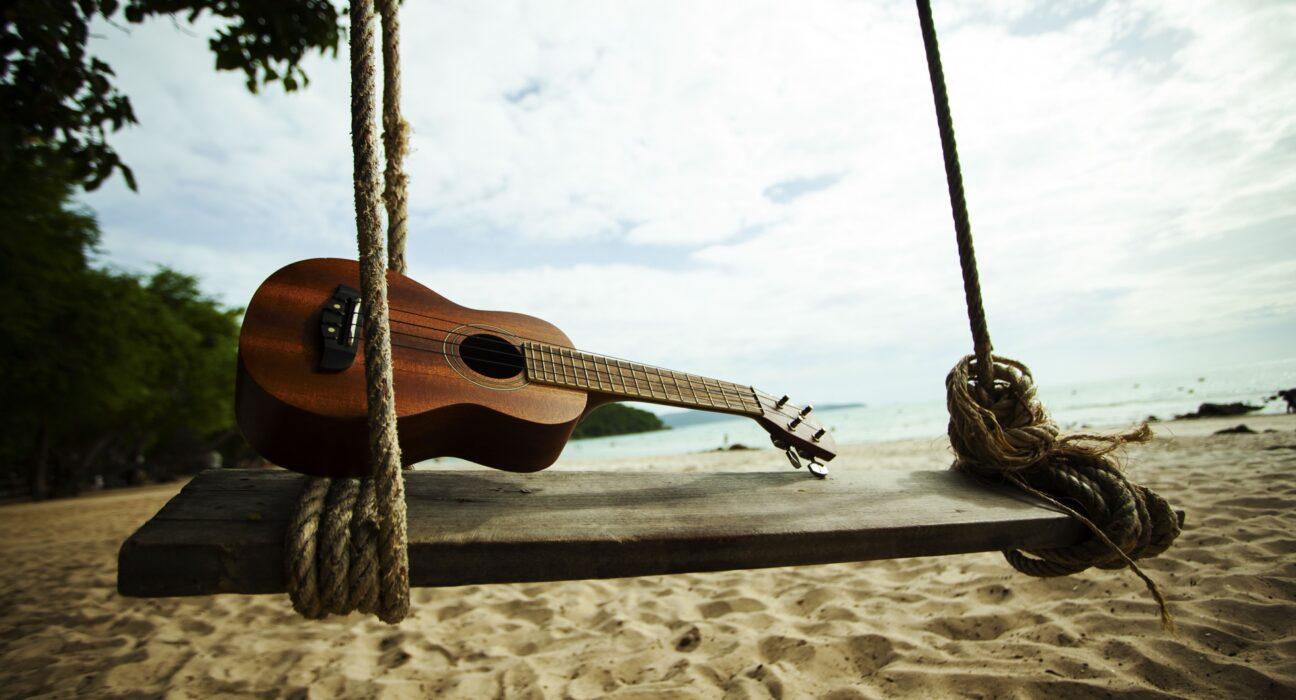
If you’ve ever sat under a tamarind tree in the evening, breeze blowing off the sea and the scent of salt in the air, you might’ve heard it — that sweet, scratchy sound that makes your foot start tapping without you even realising. That’s fungi music. The heartbeat of the Virgin Islands. The kind of sound that feels like home.
When I was a child, I remember hearing the elders laugh and sing while the band played. The washboard would rattle in time with the banjo, the bass would hum deep and steady, and someone always had a triangle or a pair of bottles to add a little sparkle. Fungi music never needed fancy instruments or a stage — just people, stories, and joy.
They say the name fungi comes from our favourite dish — the one made with cornmeal and okra, stirred until it’s just right. It’s a mix of everything, simple but full of flavour. That’s how our music is too: a blend of African rhythms, European melodies, and Caribbean soul, all mixed together by generations of Virgin Islanders who turned struggle into celebration.
Long before the bright lights of festival village, our ancestors played these tunes in the yard after a long day’s work. The songs carried their laughter and their pain, their gossip and their pride. They sang about love, politics, and the little things that make island life what it is — from donkeys on the road to the latest scandal in town.
Fungi music wasn’t just sound; it was storytelling. It was survival wrapped in rhythm.
By the time I was old enough to dance, fungi had already become the soundtrack of our celebrations. Bands like The Lashing Dogs and Eustace “Boss” Freeman and the Sparkplugs were the stars of the scene. Their music could make the shyest person get up and move. You’d hear the banjo strum, the conch blow, and before you knew it, a full circle of dancers would spin under the moonlight.
There was something magical about those nights — no big stage, no microphones, just pure energy. The kind that comes from people playing for the love of it. The music pulled us together, no matter what part of the islands we came from.
As the years rolled on, so did the music. The younger generation started mixing fungi with reggae, calypso, and a little soca spice. Some people worried it might lose its roots, but I think it just grew — the same way our people did. Bands like The Razor Blades from Elmore Stoutt High School carried the torch forward, showing that fungi still has a place in modern life.
Today, you’ll still hear it at Emancipation Festival, or when schoolchildren celebrate Culture Week. And every time that washboard scratches or that bass starts to thump, the same spirit comes alive. It’s the spirit of our ancestors — proud, strong, and unbreakable.
Fungi tells the story of who we are as Virgin Islanders. It’s the laughter, the wit, the rhythm of our speech. It’s how we hold on to our traditions even as the world around us changes.
When I hear that music now, I think of my grandparents — of barefoot dances in the yard, of jokes told between verses, of community. The kind that doesn’t need to be announced or rehearsed. It just happens, naturally.
These days, we talk a lot about preserving culture. But fungi music doesn’t need to be preserved like something fragile — it needs to be played, danced to, and lived. When the young ones pick up the banjo or start scratching the washboard, that’s how we keep it alive.
Because fungi music isn’t just about the past, it’s about who we are, right now — a people proud of our history and full of life.
So the next time you hear that familiar rhythm floating across the breeze, take a moment. Tap your foot. Maybe even dance a little. That’s the sound of the Virgin Islands calling — the sound of fungi, still alive and beating strong in the heart of our home.